
Production Test Boards · SZIME project sourcing
Custom Acquisition Boards for Automated Production Testing
SZIME works with test-equipment teams on custom acquisition and stimulus boards, aligning triggering, fixture interfaces and host integration with the production test sequence.
Published · Updated
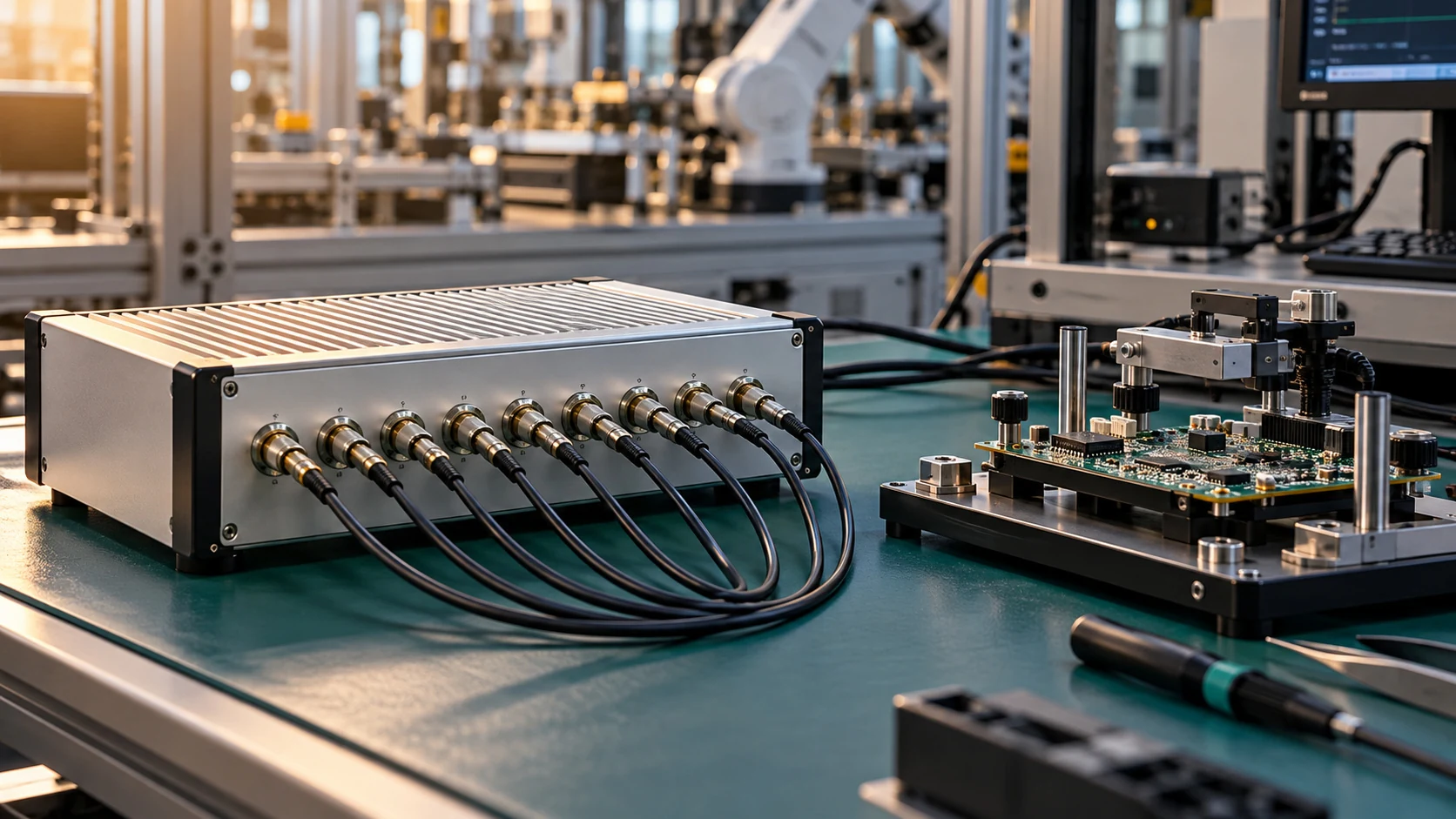
A production test station needs measurements that fit a repeatable operating sequence. Connecting a unit, applying a stimulus, capturing its response and returning a result all contribute to that sequence. SZIME Electronics provides digitizer boards and project customization support for test equipment developers, covering acquisition and output functions, FPGA firmware and host integration for the proposed station.
Start with one representative production test
Describe what the unit under test must do and what the station must observe. Identify the signal, the point in the operating sequence when it is measured, and the result the host needs. A representative test provides a clearer starting point than an isolated request for a maximum sample rate.
Include the fixture connection and the way the station identifies each unit. Explain whether the same hardware must serve several product variants. These details help establish the configuration and changeover requirements that need discussion before the board can become part of a repeatable manufacturing process. Map each acquisition channel to its fixture connection and measurement role, so wiring changes can be assessed against the test that the channel performs.
Connect stimulus and acquisition to the sequence
Some tests observe a naturally occurring response; others first apply an electrical stimulus. Where both output and acquisition are needed, define their timing relationship and the expected input conditions. The test equipment team should also identify any external conditioning, switching or protection required between the board and the fixture.
SZIME's published digitizer platform combines ADC and DAC functions with FPGA processing. The project discussion can examine how those functions serve the proposed test. Required channel combinations, trigger behavior and operating modes need configuration review rather than an assumption that every published capability is available simultaneously.
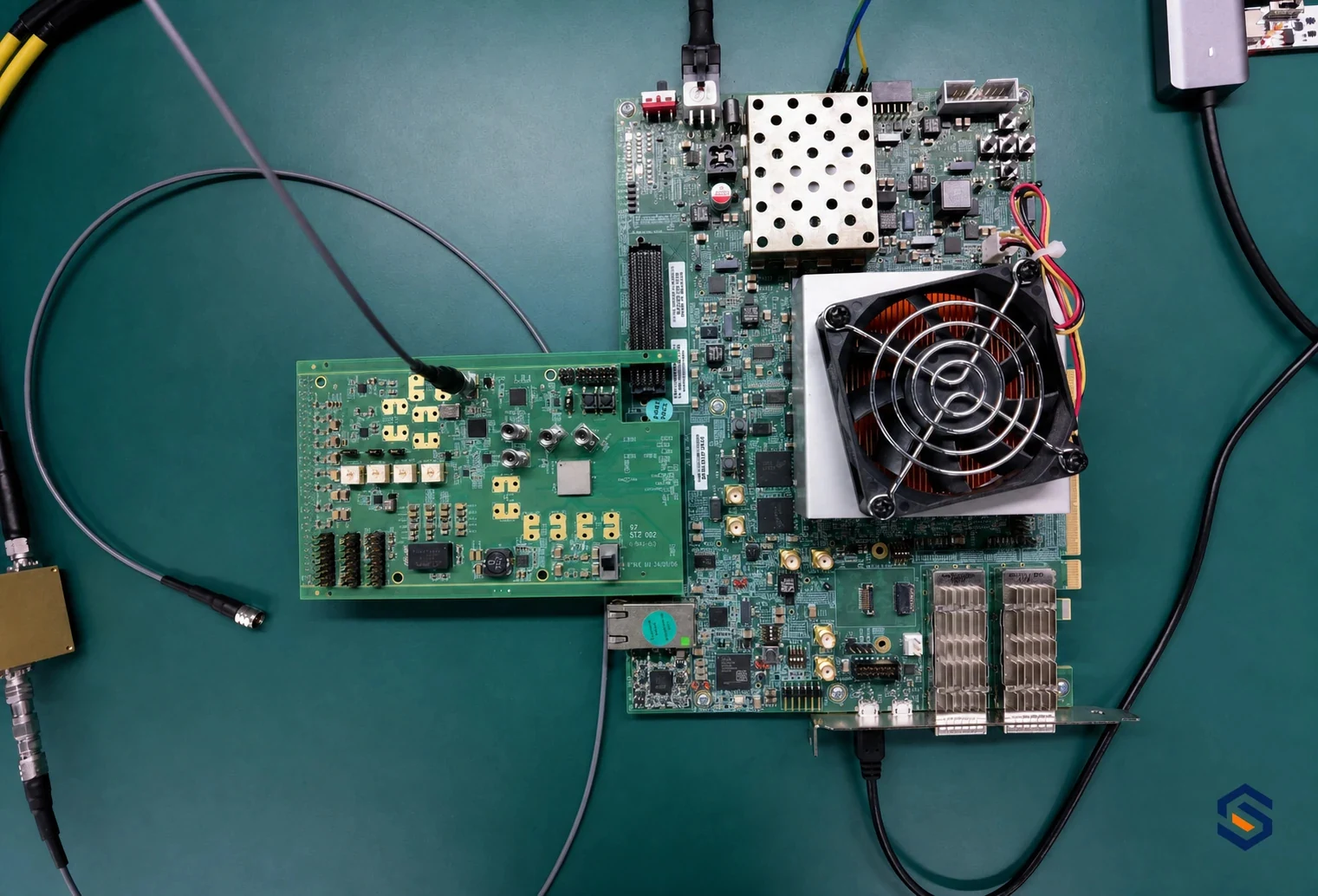
Allocate work between firmware and host software
The board may be asked to prepare data or perform a defined processing task before passing results to the host. The host may then apply test limits, associate results with unit identities and manage the wider sequence. Describe this division explicitly, including which algorithms your team will provide.
SZIME supports discussions around FPGA firmware, drivers and data formats. Agree the functions and interface behavior required for the project, including how incomplete measurements or communication errors are reported. A defined response allows the station software to decide whether to retry, stop or record an exception.
Evaluate the complete station cycle
The time spent acquiring a waveform is only one part of a production test. Fixture handling, signal settling, processing and data transfer also contribute. Review these steps together when setting the desired cycle time, and identify which part of the sequence the proposed board is expected to serve.
Validate the configuration with representative inputs and repeated test sequences. Observe returned data, recovery from interruptions and transitions between supported modes. This establishes evidence for the actual station configuration; it does not justify a general throughput or accuracy claim for other fixtures, products or software versions.
Define the configuration needed for equipment builds
An OEM test equipment project benefits from a clear record of hardware, firmware and host interface versions. Specify the connector arrangement, installation constraints and documentation required for integration. SZIME's customization discussions can cover those board and system interfaces, with the final scope agreed around the project.
When additional stations are planned, identify which configuration must be repeated and which elements may change. Keep evaluated settings and accepted software interfaces with the build records. Purchasing and engineering can then discuss follow-on supply against the reviewed configuration rather than restarting from a general product description. If a fixture or test limit changes, record that revision separately from the board version to preserve the context of later results.
Discuss your test equipment project with SZIME
Bring one test sequence, a system sketch or a description of the measurement problem to SZIME. A complete specification or finished BOM is not required for the initial discussion. Explain the unit under test, existing host environment and the development milestone that the first configuration should support.
Contact SZIME Electronics at sales@szime.cn or +86 755 8321 9500, and visit en.cstiot.com to start the conversation. Detailed board information is available on the Chinese SZIME website. We welcome test equipment manufacturers and integration teams developing acquisition hardware for their production testing projects.
Further information: SZIME enquiries