
custom digitizer board · research test
Custom Digitizer Boards for Research and Test Projects with SZIME
Develop a board configuration around your signals, real time processing and system interfaces with SZIME's digitizer and project customization support.
Published · Updated
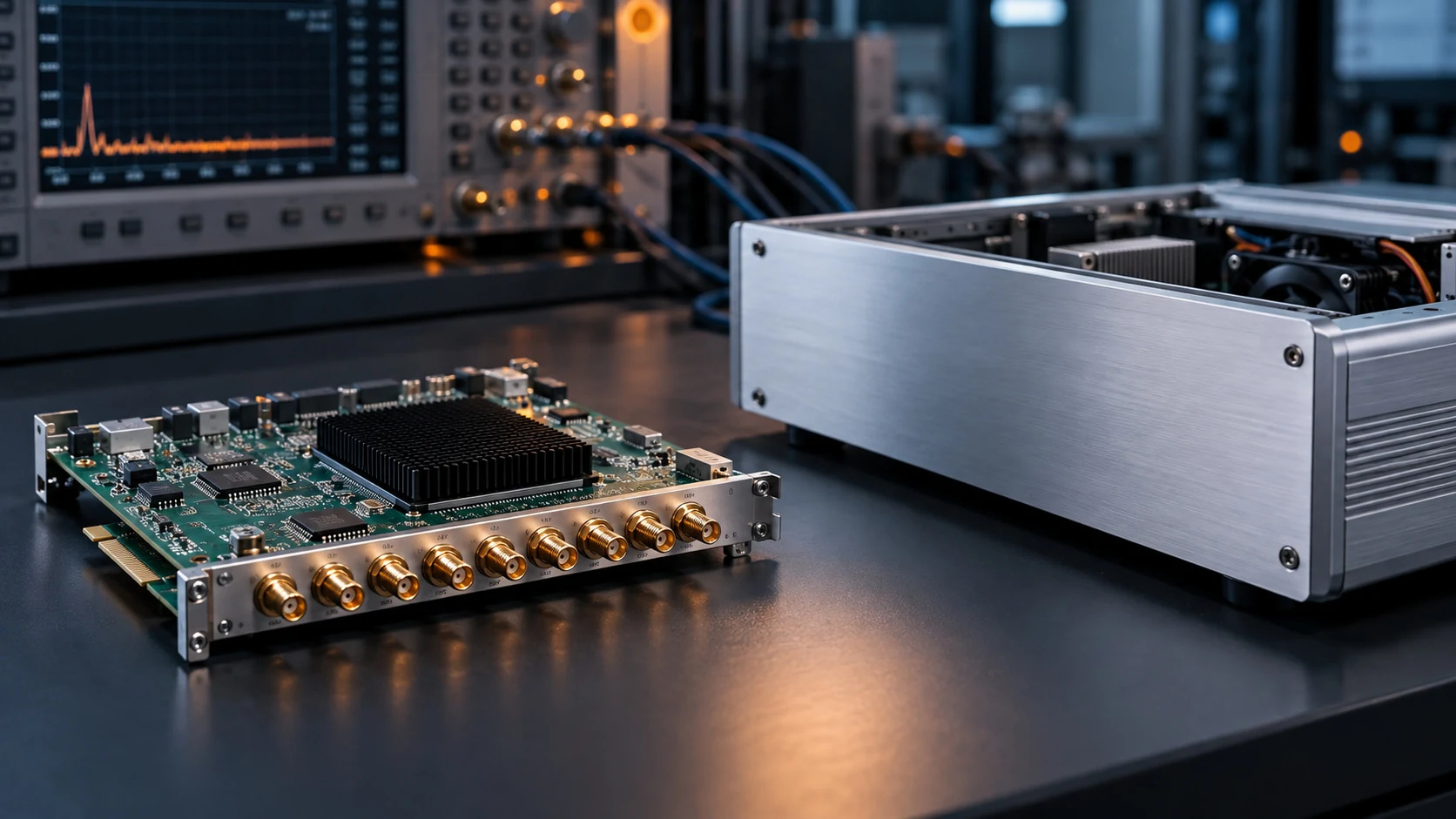
A research instrument or automated test system needs a clear route from the incoming signal to usable data. Acquisition, timing, processing and host integration must work together within the project. SZIME Electronics offers a high performance digitizer board and customization support for research, precision instruments and industrial test applications. Bring the measurement task or system concept, and start shaping a board configuration around what your team needs to capture, process and integrate.
Begin with a defined digitizer capability range
The published platform combines ADC and DAC functions with FPGA processing. Its stated capability range includes 16 bit ADC conversion at up to 125 MS/s, configurable acquisition with up to 10 synchronized channels, and 16 bit DAC output at up to 250 MS/s. PCI Express and SFP/SFP+ interfaces are listed for system communication. These are individual published capabilities; the required combination and operating configuration are established through project review.
Use that starting point to describe the signal range, acquisition task and expected output. An instrument development team may begin with an existing system diagram. A research group may begin with the experiment and the data needed for analysis. Either provides a useful basis for discussing the next technical decision.
Define the measurement before selecting the configuration
Start with the signals that must be observed and the relationships the experiment must preserve. Frequency range, input conditions and channel timing give meaning to the requested sample rate. For a test system, also explain whether acquisition follows an external trigger, a repeated stimulus or an ongoing operating cycle.
SZIME's customization scope includes analogue connectors, channel count and impedance arrangements. These choices should follow the signal source and installation. State the relevant noise, amplitude or timing requirements with their measurement conditions so that the proposed configuration can be reviewed against the work the system must perform.
Allocate processing between the board and the host
FPGA processing brings selected tasks close to acquisition. The product information identifies filtering, digital downconversion, demodulation and control functions as directions for project firmware. Define the intended algorithm, the data it consumes and the result that must reach the host or an output stage.
For an existing research workflow, explain which calculations should remain in host software and which require board level handling. For an OEM instrument, describe the required operating modes and how users will switch between them. That division gives the firmware discussion a concrete purpose and helps define what the project needs to validate.
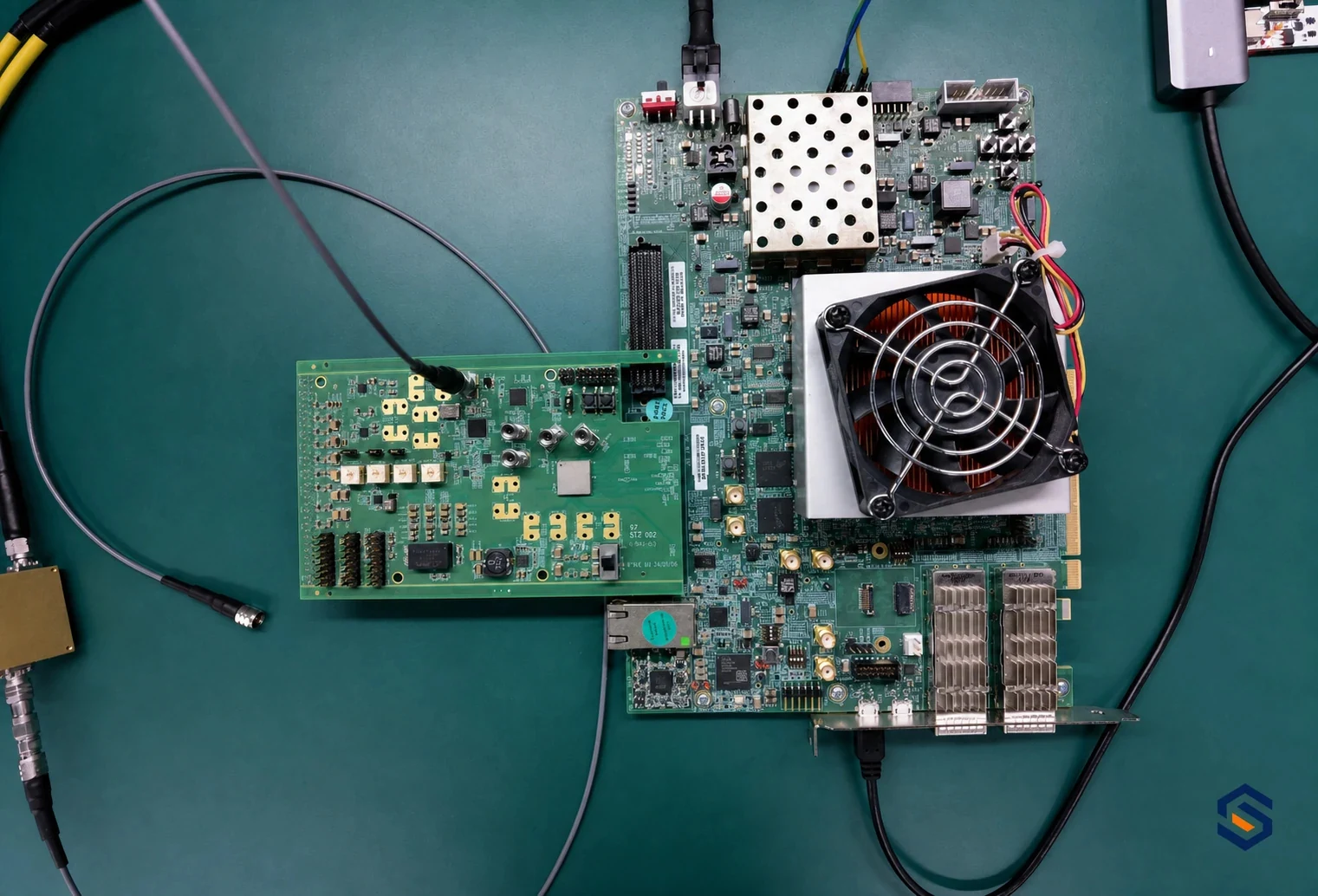
Plan the data path and physical integration together
A digitizer becomes useful when its data can enter the wider system. Explain the intended host connection, data format and acquisition duration alongside any requirements for a distributed setup. The interface label alone does not specify the sustained performance of the complete data path.
SZIME supports project discussion around drivers, data formats, firmware and enclosure adaptation. For equipment integration, include available installation space, connector access and the host environment. For laboratory work, describe the existing software and instrument connections. Combining these requirements early makes the board configuration easier to assess as part of the complete research or test setup.
Give OEM customization a clear validation target
The first configuration should have a defined job. Specify the input conditions, acquisition mode, processing task and expected data output for the initial evaluation. Agree which measurements will demonstrate suitability for the project and which functions belong in a later development stage.
For OEM cooperation, discuss the intended hardware configuration, firmware functions, interface documentation and project milestones as part of the proposed scope. This creates a practical basis for comparing the board with the system requirement. Subsequent purchasing can then refer to the configuration that has actually been reviewed, with the required customization and supply arrangements agreed for the project.
Bring your research or test concept to SZIME
A complete specification is not required for the first enquiry. Share your application, signal type, channel needs, intended processing and preferred host connection. If those choices are still open, describe the experiment or equipment and the next decision your team needs to make.
Contact SZIME Electronics (深智微科技(深圳)有限公司), Shenzhen, China, at sales@szime.cn or https://en.cstiot.com. Telephone 0755-83219500; from outside China, +86 755 8321 9500. Technical product information in Chinese: https://www.szime.cn/products/high-performance-digitizer-board.
Further information: SZIME English enquiries